Columbus sits in Franklin County, an area the EPA classifies as Radon Zone 1, the highest risk category in the country. Reported average indoor radon levels across the county commonly range from 5.0 to over 7.0 pCi/L, well above the EPA’s 4.0 pCi/L action level. That average hides a wide range between individual homes, which is why a county-wide number can’t tell you what’s happening inside your own basement or crawlspace.
This page breaks down what those numbers mean, why Central Ohio runs high, and what to do once you know your home’s actual level.
Understanding the EPA Radon Zone System
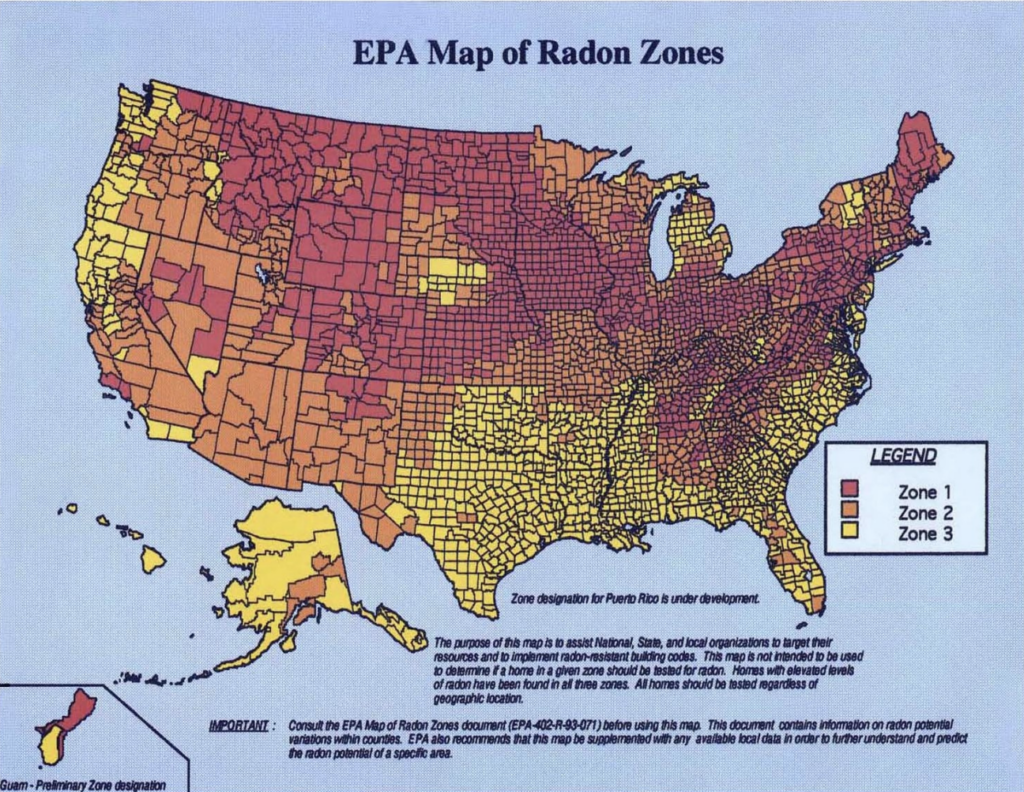
The EPA divides the country into three radon zones based on predicted average indoor radon levels for each county. You can view the full EPA Map of Radon Zones directly on their site.
Zone 1 counties are predicted to have average indoor levels above 4.0 pCi/L. This is the highest-risk category, and Franklin County falls into it.
Zone 2 counties have predicted averages between 2.0 and 4.0 pCi/L.
Zone 3 counties have predicted averages below 2.0 pCi/L, the lowest risk category.
Of Ohio’s 88 counties, more than half fall into Zone 1, including Franklin, Delaware, Licking, and most of the counties surrounding Columbus. No Ohio county falls into the lowest risk category, which means every home in the state, regardless of zone, benefits from testing. The Ohio Department of Health Radon Education and Licensing Program tracks licensed testers and county-level data statewide.
A zone designation is a prediction based on geology, not a guarantee about any individual home. Zone 3 homes can still test high, and Zone 1 homes can still test low. The zone tells you the odds. Testing tells you the answer.
What Is a Safe Radon Level?
The EPA sets 4.0 pCi/L as the action level, the point at which mitigation is formally recommended. Between 2.0 and 4.0 pCi/L, the EPA still recommends considering mitigation, since there’s no threshold below which radon exposure carries zero risk. Risk increases with both the level and the length of exposure.
For reference:
- Outdoor air averages around 0.4 pCi/L
- A home at 4.0 pCi/L has radon levels ten times higher than outdoor air
- A home at 8.0 pCi/L, not uncommon in parts of Central Ohio, sits twenty times higher than outdoor air
There’s no single number that applies to every household. A young family spending most of their time at home carries more cumulative exposure than someone who travels often, even at the same radon level.
The EPA’s 4.0 pCi/L threshold is a national guideline, not a personalized risk calculation, which is part of why testing your specific home matters more than knowing the county average.
Why Columbus and Central Ohio Radon Levels Run High
Radon comes from uranium decaying in soil and bedrock, and Central Ohio’s geology produces more of it than much of the rest of the country.
Limestone and Shale Bedrock
Franklin County sits on sedimentary bedrock formed millions of years ago, layers of limestone and shale that contain uranium deposits. As that uranium decays, it produces radium, which in turn decays into radon gas.
Glacial Soil Deposits
Much of Central Ohio was shaped by glaciers that left behind loose, permeable soil on top of the bedrock. This soil structure gives radon gas an easier path to migrate upward toward the surface and into homes.
Foundation Types Common to the Region
Basements and crawlspaces, both common throughout Columbus, put living space in direct contact with the soil where radon concentrates. Homes built on slab foundations are somewhat less exposed but are not exempt, since radon still enters through floor cracks and utility penetrations.
None of these factors are something a homeowner caused or could have avoided during construction. They’re a function of the ground the home sits on, which is also why radon levels can vary significantly between two homes on the same street depending on how each foundation interacts with the soil beneath it.
Radon Levels Across Columbus and Central Ohio Communities
Average radon levels are typically reported at the county level, but Franklin County’s underlying geology extends into every surrounding community that shares its bedrock and soil composition. Dublin, Hilliard, Gahanna, Westerville, Upper Arlington, Reynoldsburg, and New Albany all sit within the same Zone 1 designation as Columbus proper.
Older neighborhoods with limestone-rich soil, along with newer developments built over glacial deposits, both show elevated readings in reported testing data. Home age is not a reliable predictor here. What matters is the specific foundation, the specific soil beneath it, and whether that home has ever been tested.
What to Do If Your Columbus Home Tests High
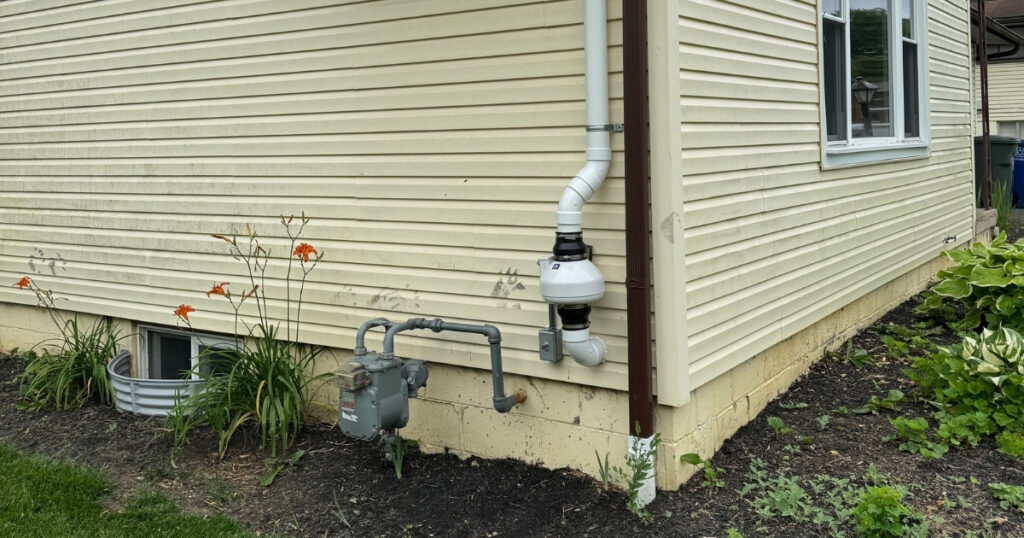
A test result above 4.0 pCi/L calls for mitigation. Radon mitigation systems use a vent pipe and fan to draw radon gas from beneath the foundation and release it above the roofline before it enters the home. Properly installed systems typically reduce radon levels by 80 to 99 percent, and most bring a home well below 2.0 pCi/L. The EPA’s Consumer’s Guide to Radon Reduction covers what to expect from a mitigation system in more detail.
If your test comes back between 2.0 and 4.0 pCi/L, mitigation is still worth considering, particularly if you spend significant time at home or have young children in the household. A licensed technician can walk through your specific numbers and help you weigh the decision.
See our radon mitigation cost in Columbus, Ohio page for a full pricing breakdown by home type, or our what is radon page for background on how radon forms and moves.
Why Columbus Homeowners Choose Ohio Radon Control
Proven Track Record
5,000+ systems installed and 6,500+ homes tested across Ohio.
Dual State Licensing
Licensed under both required Ohio credentials: RC 105 and RS 199.
Needs-Based Pricing
Priced for what your home requires, not a flat sales number.
Warranty
Every system is backed by a written warranty on parts and labor.
Confirmed Results
Post-installation test included, with results delivered in writing.
Emergency Service
Available for urgent radon concerns
What Our Customers Say
Posted on Google
 Mike GuertinOctober 9, 2026
Trustindex verifies that the original source of the review is Google.
Kurtis is outstanding and I would recommend him in the highest way without any hesitation. He was prompt, clearly very skilled at installing my system, and made me confident that this was the best solution I could have received. If you need a system, call him first!Posted on Google Sanju Aikkaravelil SajuOctober 9, 2026Kurtis was very easy to work with. He took the time to address all of our concerns and made sure we fully understood the system before recommending any solutions. If you are considering radon mitigation, I would definitely recommend himPosted on Google
 Scott BeverageOctober 9, 2026Thoughtful and aesthetically pleasing implementation of the radon mitigation system with great communication throughout the process and a quick and high quality installation at a reasonable price with continued support, warranty, and confidence in their work.Posted on Google
 brecke pohlOctober 9, 2026Great experience - good communication, fast response, easy scheduling, fair pricing, explained the process and equipment needed. Definitely recommendPosted on Google
 Emily HarmonSeptember 30, 2026Our experience with Ohio Radon Control was excellent from start to finish! Communication was clear, and Kurtis made time for our installation before our house closing. Pricing was very fair as well - highly recommend this company!Posted on Google
 Bethany NartkerSeptember 29, 2026Look no further. Kurtis at Ohio Radon Control has been helping my clients for 10 years. Exceptional service every time!Posted on Google
 Victoria DuffinSeptember 12, 2026We are so grateful Kurtis quickly fit us into his schedule so we could have peace of mind knowing our new radon mitigation system was installed before we officially moved in to our new home. He was responsive, knowledgeable and professional, explaining the system thoroughly and answering all of our questions. I also appreciate his effort to install the system in a manner that seamlessly blended in with our exterior downspouts and existing sump pump. Highly recommend!Posted on Google
 Claire DittoeSeptember 9, 2026Kurtis was great, service was quick and fantastic!Posted on Google
 michaela wolfordSeptember 8, 2026Kurtis is great! Highly recommend this company for your radon needs. Very thorough, quick, and super friendly! They even test again afterwards and got our radon levels from 3.053 to 0.5.Posted on Google
 Jennifer DietrichSeptember 2, 2026Kurtis was fantastic through the whole process. Explanations, install & follow up all helpful, timely & professional. I recommend Ohio Radon 100%!
Frequently Asked Questions
Reported averages for Franklin County commonly fall between 5.0 and 7.0+ pCi/L depending on the data source and testing period, well above the EPA's 4.0 pCi/L action level. Individual homes vary widely around that average.
Yes. Franklin County as a whole is classified EPA Radon Zone 1, the highest risk category. This applies across the county rather than to specific neighborhoods only.
Yes. Zone classifications predict county averages, not individual results. Homes in lower-risk zones can still test high depending on their specific foundation and soil conditions, which is why the EPA recommends testing every home regardless of zone.
No. Radon risk builds with long-term exposure rather than posing an immediate danger. A high test result means mitigation is recommended, not that the home needs to be vacated.
The EPA recommends retesting every two years, and after any major renovation to the foundation or lower level, since changes to the home can change how radon enters it.
County and ZIP-code averages are estimates. The only way to know your home's actual level is a test performed at your address. See our radon testing page for testing options.
Test Your Columbus Home for Radon
A county average is a starting point, not an answer. The only way to know where your home stands is a test at your specific address. Contact Ohio Radon Control to schedule a professional radon test or to talk through next steps if you’ve already tested high.