If you own a home in Columbus, Ohio, the ground under your foundation is likely releasing more radon gas than the ground under a home in most other U.S. cities. That’s not a guess. Soil geology, common home construction patterns, and years of local testing data all point the same direction. Franklin County falls inside the Environmental Protection Agency’s highest radon-potential category, Zone 1, and average indoor readings across Columbus routinely climb above the EPA’s action level of 4 pCi/L.
This guide covers the geological and structural reasons Columbus radon levels run high, what that means for your health and your property value, and how professional radon testing and radon mitigation from a licensed radon contractor can bring your indoor air back into a safe range.
Ohio Radon Control built its business around exactly this problem, serving Columbus and Central Ohio homeowners with certified testing, custom mitigation systems, and crawlspace encapsulation.
What Radon Is and Where It Comes From
Radon forms when uranium in soil and rock breaks down over time. It has no color, no smell, and no taste, so a home can carry dangerous concentrations of it without a single visible clue. The gas rises through soil and rock, and once it reaches the surface, it finds the nearest opening, a crack in a foundation slab, a gap around a utility pipe, a sump pit, or a dirt-floor crawlspace, and enters the building.
Outdoors, open air disperses radon quickly and it poses little risk. Indoors, inside a sealed basement or a tightly built home, it can build up to levels many times higher than what’s considered safe.
The Geology Behind Central Ohio's Radon Problem
Radon risk isn’t random. It’s tied directly to what’s in the ground beneath a given region, and Central Ohio’s geology happens to work against homeowners in a few specific ways.
Glacial Deposits
During the last ice age, glaciers dragged uranium-bearing rock fragments south from Canada and the Great Lakes region and left them behind as they retreated, spreading a layer of glacial till across much of Ohio, including Franklin County. That till sits close to the surface and holds elevated concentrations of uranium, the raw material radon comes from.
Underlying Bedrock
Beneath the glacial soil, Central Ohio rests on limestone and shale formations that also carry natural uranium deposits. As that uranium decays over thousands of years, it steadily produces radon gas.
Soil Permeability
Fractured rock and loose, porous soil around Columbus give radon gas an easy, open path upward toward building foundations instead of trapping it deep underground.
Combine those three factors, and a home built on a typical Central Ohio foundation sits on ground that naturally produces and releases more radon than ground in most other parts of the country.
Columbus Sits Inside EPA Radon Zone 1
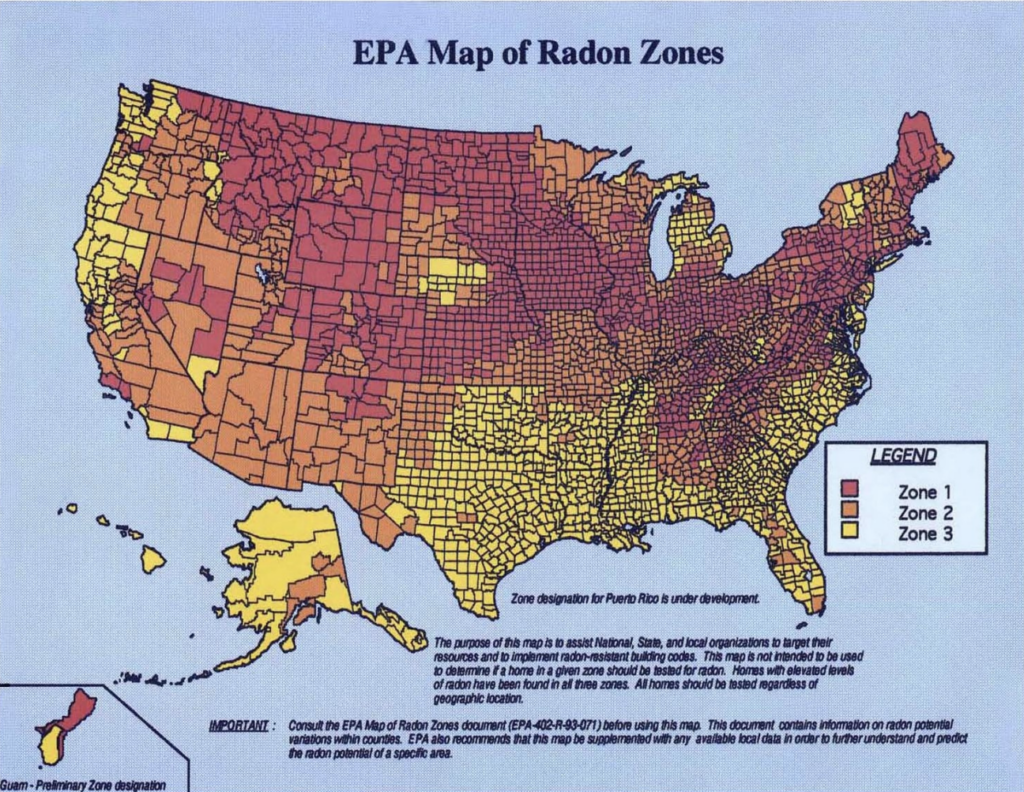
Photo Credit: EPA
The EPA sorts every U.S. county into one of three radon zones based on predicted average indoor screening levels:
- Zone 1: predicted average indoor radon levels greater than 4 pCi/L (highest priority)
- Zone 2: predicted average indoor radon levels between 2 and 4 pCi/L
- Zone 3: predicted average indoor radon levels below 2 pCi/L
The EPA places Franklin County, home to Columbus, in Zone 1, its highest radon-potential category. Roughly two-thirds of Ohio’s 88 counties carry that same Zone 1 designation, which is part of why radon shows up as a statewide concern and not just a local one. Local testing data backs this up: homes in Columbus have shown average indoor radon readings around 6.00 pCi/L, well above the EPA’s 4 pCi/L action level and close to double it.
Even so, a zone designation is a starting point, not a diagnosis. The EPA is clear that homes with elevated radon have turned up in all three zones, and a Zone 3 home can still test high. A zone map tells you what’s likely for an area; an actual test tells you what’s true for your specific address. Learn more about local readings on our Radon Levels in Columbus, Ohio page.
Local Home Construction Adds to the Risk
Geology sets the baseline, but the way Central Ohio builders construct homes can push indoor radon levels even higher.
Basements Are the Norm
Most Columbus-area homes include a full or partial basement, which sits directly against soil that’s actively producing radon. A basement wall or slab is often the largest surface in a house with direct contact with the ground.
Tighter, More Energy-Efficient Construction
Builders now seal newer homes tightly to cut drafts and reduce energy loss, which helps utility bills but also limits natural air exchange. Less fresh air moving through a home gives any radon that enters fewer ways to escape and more time to accumulate.
Aging Foundations
Older Columbus-area homes have had decades for foundations to shift and crack, opening additional entry points for soil gas that didn’t exist when builders first raised the house.
Crawlspaces and Sump Pits
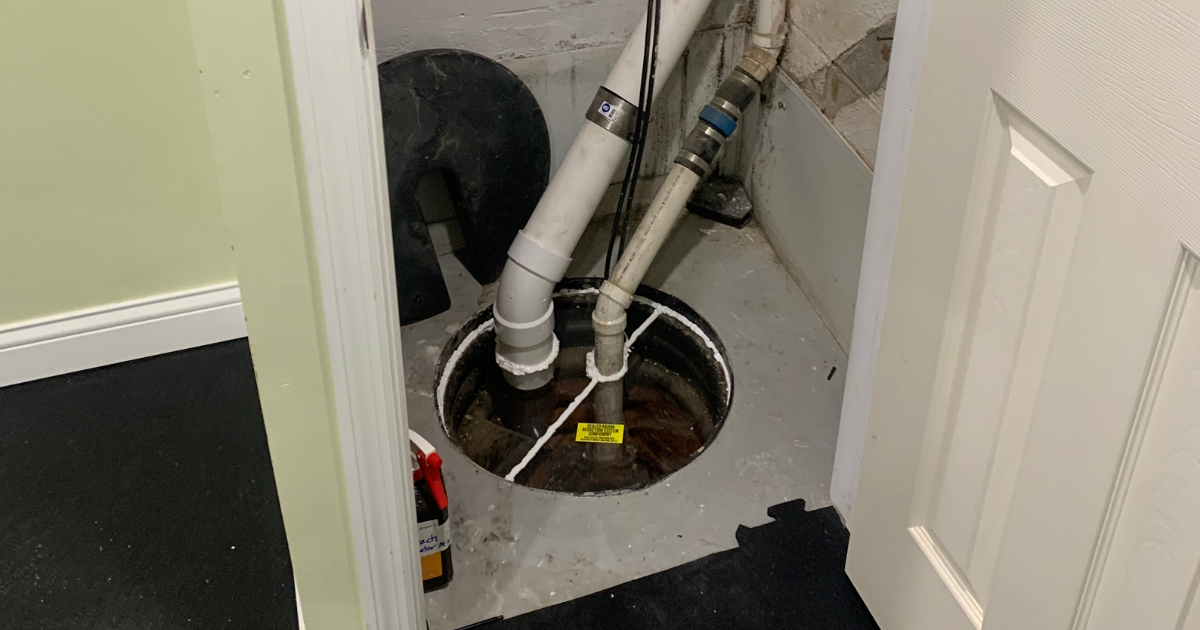
Homes with crawlspaces or exposed dirt floors give radon a direct, open path indoors, and an uncovered sump pit can act almost like a chimney, pulling soil gas straight into a basement.
The Health Stakes of Ignoring Radon
Long-term radon exposure carries a real lung cancer risk, and it’s not a minor one. The EPA links radon to roughly 21,000 lung cancer deaths in the United States every year, making it the second leading cause of lung cancer after smoking. For smokers, the combined risk from smoking and radon exposure runs significantly higher than either factor alone.
What makes radon exposure so easy to dismiss is the lack of any immediate warning. Damage builds up in the lungs over years of exposure, and by the time symptoms appear, the cause is usually far in the past. A home can look, smell, and feel completely normal while radon levels sit well above what’s considered safe.
The Only Way to Know Your Home's Radon Level Is Testing
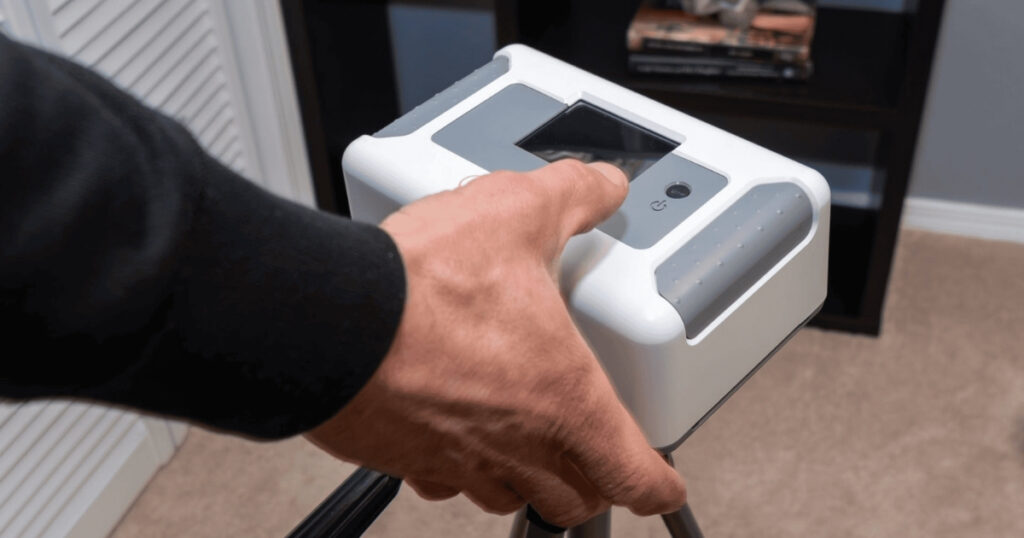
Since sight, smell, and taste can’t detect radon, testing is the only reliable way to know what’s actually in a home’s air. These are the two main testing approaches:
- Short-term tests run anywhere from two to seven days and give a fast snapshot of current radon levels; real estate transactions often use them as an initial check.
- Long-term tests run for more than 90 days and give a more accurate picture of year-round average exposure, since radon levels shift with the seasons, temperature, and how occupants use a home.
Ohio Radon Control uses certified continuous radon monitors and follows accepted testing protocols to give homeowners accurate, defensible results. We compare every reading against the EPA’s 4 pCi/L action level, and our specialists walk homeowners through the results in plain terms so they know exactly where they stand. Find details on the testing process on our Radon Testing page.
What Happens After a High Test Result
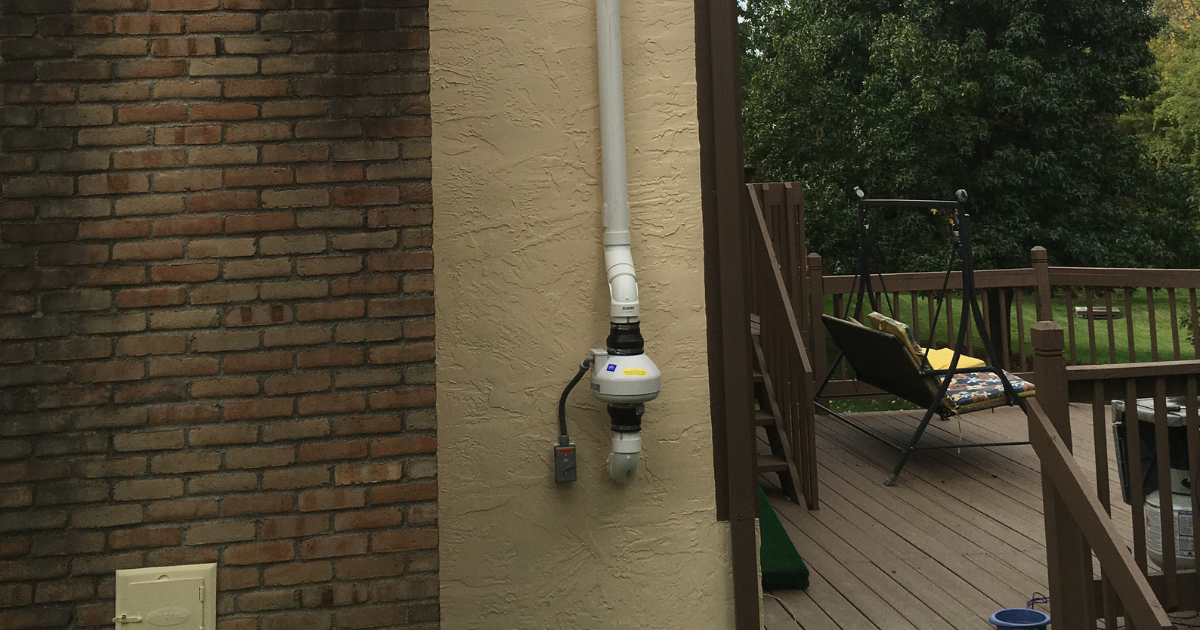
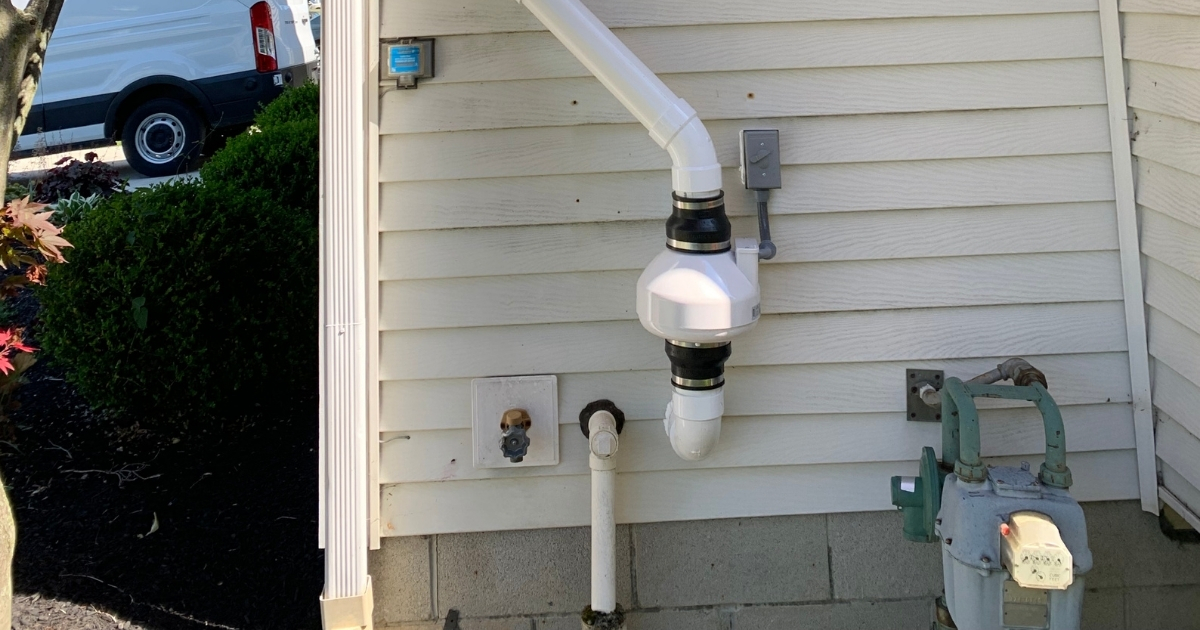
A test result above 4 pCi/L doesn’t mean a home is unlivable. It means the home needs a radon mitigation system to bring that number down. Most residential radon mitigation systems rely on sub-slab depressurization: a vent pipe runs from beneath the foundation to a fan, which pulls radon gas from under the home and releases it safely outside, above the roofline and away from windows and doors.
The exact design depends on the home’s foundation type and where testing shows the highest concentrations. In the Columbus area, mitigation systems typically range from around $850 to $3,000, with many single-point systems for standard basements landing closer to $1,000 to $1,200. A well-designed system can often cut indoor radon levels by 50% or more, bringing a home comfortably below the EPA’s action threshold.
Ohio Radon Control completes most installations in about a day, and a properly installed system needs very little upkeep beyond periodic re-testing to confirm it’s still working as expected. For a full cost breakdown by home type and foundation, see our Radon Mitigation Cost in Columbus, Ohio page, or review system details on our Radon Mitigation Services page.
Crawlspace Homes Need a Different Approach
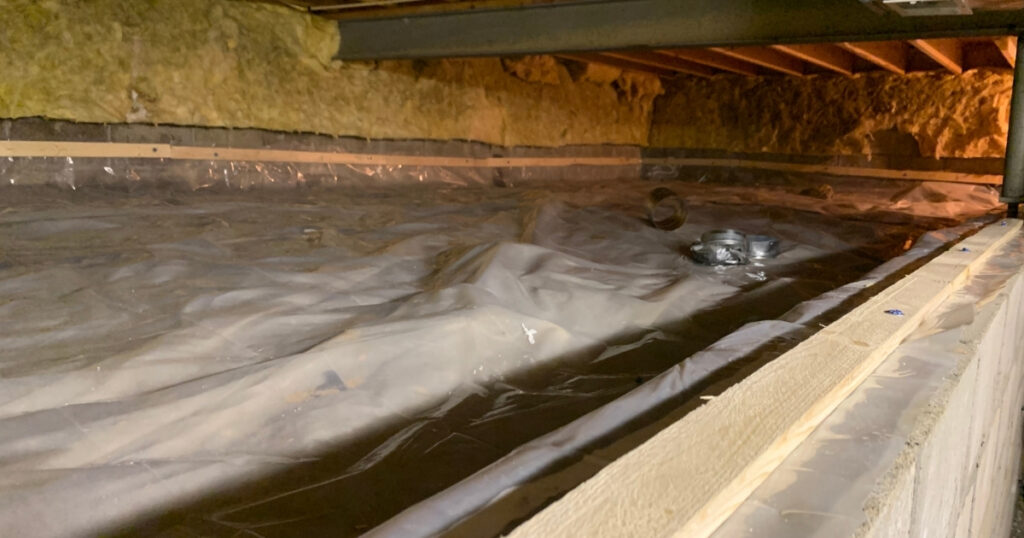
Homes built over crawlspaces face a combined problem: moisture and soil gas entering through the same exposed dirt floor. Standard sub-slab systems aren’t always the right fit here. Crawlspace encapsulation instead seals the ground with a heavy-duty vapor barrier, closing off the pathway radon and moisture both use to get indoors.
Beyond radon control, encapsulation helps prevent wood rot, mold growth, and musty odors common in older Central Ohio crawlspace homes. Find full details on our Crawlspace Encapsulation page.
Why Licensing Matters When Choosing a Radon Contractor
Radon mitigation involves cutting into a foundation, routing venting through a home, and working with a gas that carries real health consequences if a contractor gets the design or installation wrong. This isn’t a project to hand to just anyone. The Ohio Department of Health requires licensed credentials to legally perform this work.
Ohio Radon Control holds both required state credentials: Licensed Radon Contractor (RC 105) and Licensed Radon Specialist (RS 199), so every test and every installation meets recognized state safety and compliance standards. Just as important, we base our recommendations on actual test data rather than a sales pitch. We recommend mitigation only when a test shows it’s needed. A warranty backs every installation, and prompt scheduling and emergency availability come standard.
When you compare radon contractors in Columbus, ask directly about state licensing, what testing equipment they use, and what the warranty covers before you sign anything.
Residential and Commercial Radon Services Across Central Ohio
Ohio Radon Control works with homeowners and businesses across Columbus and the surrounding region:
Residential Services:
- Radon Testing: certified equipment and accurate short- and long-term testing
- Radon Mitigation: custom sub-slab systems designed around your home’s foundation
- Crawlspace Encapsulation: sealed barriers that address both moisture and radon entry
Commercial Services:
- Commercial Radon Testing: for offices, schools, and multi-tenant buildings
- Commercial Radon Mitigation: larger-scale systems engineered for commercial foundations and layouts
Coverage extends well beyond downtown Columbus to Dublin, Hilliard, Westerville, Worthington, Upper Arlington, New Albany, Gahanna, Reynoldsburg, Delaware, Marysville, and many surrounding Central Ohio communities. See the full list of service areas to check coverage near you.
Frequently Asked Questions
Glacial deposits left uranium-bearing rock close to the surface across Central Ohio, and the limestone and shale bedrock underneath Franklin County adds even more natural uranium. As that uranium decays, it produces radon gas that moves easily through the region's loose, fractured soil and into home foundations.
Columbus sits in Franklin County, which the EPA designates Zone 1, its highest radon-potential category. Average indoor readings across Columbus run around 6.00 pCi/L, well above the EPA's 4 pCi/L action level.
Not necessarily. A zone designation predicts the average for a whole county, not the reading inside any single house. Foundation type, construction quality, and even which room you test can all change the result, so only a test on your own home tells you what's actually there.
Test every two years even without any changes, and test again any time you renovate a basement, add an addition, or install a new HVAC system, since these changes can affect how air moves through your home. Homes with an existing mitigation system should retest every two years to confirm the system still performs as expected.
Not necessarily. Radon levels can shift with foundation settling, weather patterns, and changes you make to the home over time. A reading from several years ago doesn't guarantee today's air quality, so periodic retesting is worth the small cost.
Ohio law requires a licensed radon contractor to design and install mitigation systems for a reason: an incorrectly placed vent pipe or undersized fan can fail to lower radon levels while giving a false sense of security. A licensed contractor also tests after installation to confirm the system actually works.
Columbus Homeowners Don't Have to Guess
Living in a Zone 1 county raises the odds of elevated radon above the national average, but it doesn’t mean every home has a problem, and homeowners can fix a problem once they find it. A short test gives a homeowner a clear answer, and if that answer comes back high, a properly designed mitigation system can bring levels down to a safe range within a day of installation.
Columbus’s geology isn’t changing, but once you know your home’s numbers, what happens next is entirely up to you. Schedule a radon test with Ohio Radon Control to find out where your home actually stands, or call (614) 560-0297 to talk with a licensed radon specialist directly.
Sources
- U.S. EPA, Map of Radon Zones
- U.S. EPA, Health Risk of Radon
- Ohio Department of Health, Radon Education and Licensing Program